Reusable Fabric Christmas Crackers Tutorial: No Waste, All the Fun
The Christmas cracker is a beloved ritual and an environmental disaster: pulled once, admired for ten seconds, and swept into the bin with the wrapping paper. A reusable fabric cracker keeps the ritual — the snap, the hat, the joke, the gift — and loses the waste. Untie the ends, wash the wrap, fill it again next year.
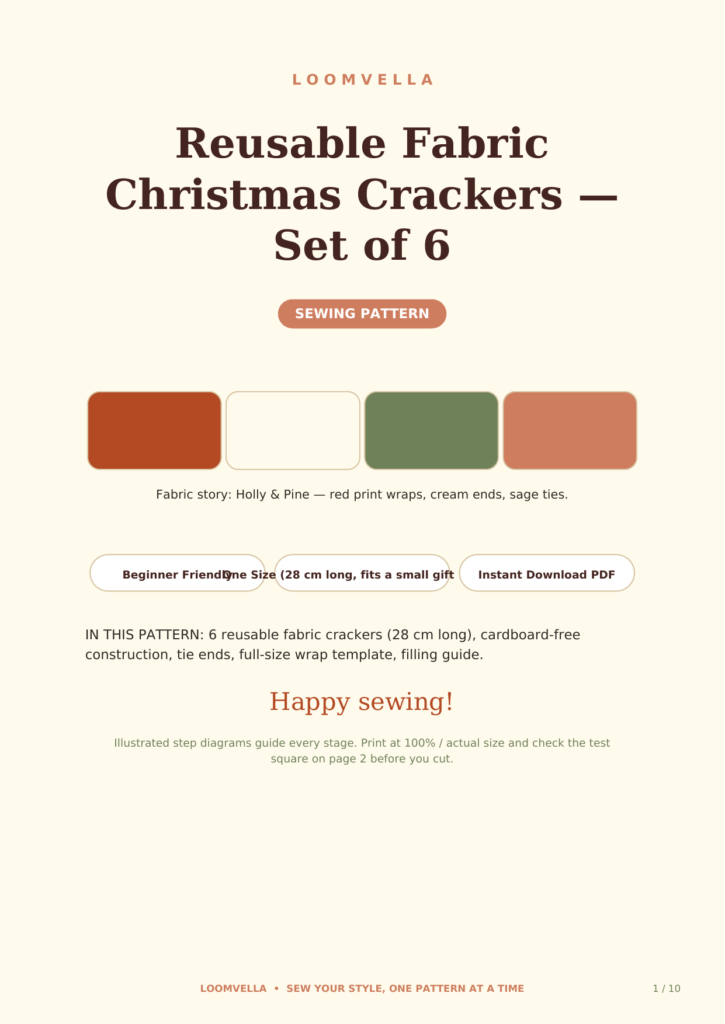
This guide covers the wrap, the cardboard-free shaping, filling ideas, and the ties that undo. The full printable version with the full-size wrap template is Reusable Fabric Christmas Crackers — Set of 6.
Why reusable crackers?
A paper cracker is used once and thrown away. Multiply by the millions pulled every Christmas and the waste is staggering — and most of the “gifts” inside are plastic trinkets nobody wanted. A fabric cracker changes the economics: because you keep it, you can afford to fill it properly. A good chocolate, a handwritten joke, a small useful gift. The cracker becomes the gift, not the wrapper.
They also look better. Paper crackers are all the same; fabric crackers can match your table, your tree, or the recipient. Make a set in one fabric story and the Christmas table looks coordinated in a way shop-bought crackers never manage.
The wrap: cutting and fabric choice
Fabric
Use quilting cotton: it presses crisply, holds a crease, and washes well. A Christmas print for the outside and a plain or small-print lining works beautifully. In the pattern, the story is Holly & Pine: deep red outer, cream lining. Avoid stretchy or very heavy fabrics — stretch distorts the wrap, and heavy fabric will not gather neatly at the ties.
Cutting
Each cracker wrap is a rectangle, 28 cm long, cut from the full-size template. Cut six identical wraps for a matching set. Rotary-cut for straight edges: the wrap is long and narrow, and a wobbly edge shows in the finished cracker.
Shaping without cardboard
The traditional problem
Paper crackers get their shape from cardboard tubes: a centre tube that holds the gift and two end tubes that form the cracker shape. Fabric crackers skip the cardboard — which is the point, since cardboard is single-use too — and shape the fabric directly.
Rolling and pressing
Roll the wrap into a tube around the filling, overlap the long edge, and press the seam. Then gather each end and tie it: the gathers are what make the cracker shape. Press the gathers lightly so they hold their folds. The result is a proper cracker silhouette with no cardboard inside.
Keeping the tube even
Roll firmly but not tightly: too tight and the filling is crushed, too loose and the cracker looks deflated. The tube should be even along its length. If one end is fatter than the other, unroll and start again — thirty seconds now saves a lopsided cracker.
Filling ideas
What goes inside
Because the cracker is reusable, fill it like a gift: a chocolate truffle, a lip balm, a small candle, a lottery ticket, a handwritten joke on a slip of paper. Avoid anything that stains the fabric — no red wine miniatures, no lipstick samples. Think “small present”, not “party-bag filler”.
The hat and the joke
Include a paper hat if you like the tradition — tissue hats are cheap and recyclable — and write your own jokes. Shop-bought cracker jokes are famously terrible; yours can be merely bad, which is an improvement. Personal jokes make the crackers a talking point.
The snap
Traditional cracker snaps are single-use and contain a tiny explosive charge. Skip them, or use a reusable alternative: some makers tuck in a small bell or a party blower. The snap is the least important part of the ritual — nobody remembers the bang, everyone remembers the gift.
Ties that undo
Ribbon ties
Tie each end with a ribbon or cord bow. The bow is structural: it holds the gathers closed. Tie it firmly enough to stay through dinner, loosely enough to untie without a struggle. Grosgrain ribbon works well — it grips and unties cleanly.
Untying and washing
After Christmas, untie the bows, remove the filling, and wash the wraps on a gentle cycle. Press while damp and they are ready to fill again. The ties can be reused too. A set of six crackers should last a decade of Christmases.
Crackers as place settings
A fabric cracker at each place is a place setting, a favour, and a decoration in one. Make them in the same fabric story as the rest of the table: the quilted Christmas placemats underneath, the crackers on top, and the wine bottle gift bags beside each place. One fabric story, a whole Christmas table.
For the tree, add the crochet amigurumi ornaments — handmade from the table to the treetop.
Troubleshooting crackers
The ends will not stay tied
The ribbon is too slippery or the bow too loose. Use grosgrain instead of satin, and tie a proper bow, not a single knot. A dab of fray-check on the bow’s knot keeps it from working loose during dinner.
The tube looks lumpy
The filling is uneven or the wrap was rolled loosely. Redistribute the filling along the tube before tying, and roll with even tension. Lumpy crackers still work — they just look handmade, which is rather the point.
No waste, all the fun
Reusable fabric crackers are the rare Christmas craft that is better than the thing it replaces: prettier, better filled, and back next year. Make a set of six, fill them properly, and enjoy the only crackers that do not end the night in the bin.
Ready to start? Get the full printable pattern here: Reusable Fabric Christmas Crackers Pattern. Print at 100 percent, check the test square, and sew crackers that come back next year.